



Top 10 Temperature Sensor Manufacturers in Pune | Yashashree Techno Solutions
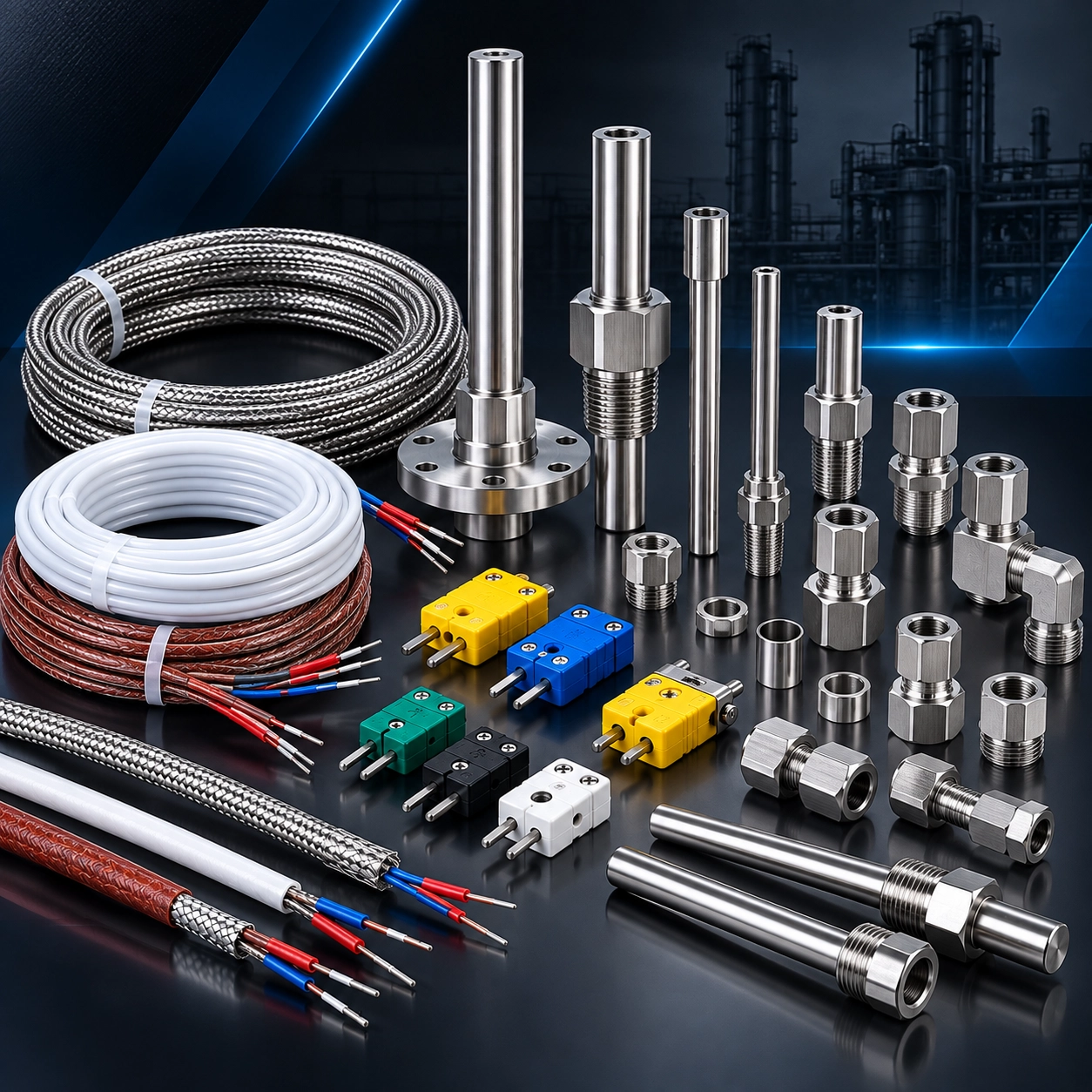


Yashashree Techno Solutions is leading Temperature Sensor Manufacturers, Suppliers and Exporters in Pune. A temperature sensor is a measurement device used to detect and measure temperature changes in machines, equipment, processes, and industrial environments. Temperature sensors convert temperature conditions into an electrical or measurable signal that can be monitored, displayed, recorded, or used for control.
Our temperature sensor solutions are suitable for industrial automation, process control, machinery, equipment monitoring, manufacturing, and other applications where reliable temperature measurement is required. Depending on the application, sensors can be selected based on temperature range, accuracy, response time, installation method, and environmental conditions.
From RTD temperature sensors and thermocouple temperature sensors to thermistors, infrared sensors, Pt100 sensors, temperature probes, transmitters, and switches, each technology has specific characteristics and applications.
Temperature Sensor Service Providers in Pune
- Temperature Sensor: A temperature sensor detects temperature and provides a corresponding signal that can be measured, displayed, monitored, or used by a control system.
- Industrial Temperature Sensor: An industrial temperature sensor is designed for measuring temperature in machinery, manufacturing equipment, process plants, and industrial environments.
- Process Temperature Sensor: A process temperature sensor is used to measure temperature in industrial processes where monitoring and controlling temperature is important for operation and product quality.
Temperature Sensor System Integrators in Pune
- Temperature Measurement Sensor: a temperature measurement sensor converts temperature conditions into a measurable output using technologies such as resistance-based sensing, thermoelectric sensing, or other suitable methods.
- Temperature Monitoring Sensor: a temperature monitoring sensor provides temperature information for continuous or periodic monitoring of equipment, processes, machinery, and industrial systems.
- Temperature Detection Sensor: A temperature detection sensor detects changes or specified temperature conditions and can provide signals to monitoring or control systems.
Types of Temperature Sensors
As we are leading Temperature Sensor Manufacturers in Pune, our Types are designed to meet different application requirements and industry standards, including the following types:
- RTD Temperature Sensor: An RTD temperature sensor, or resistance temperature detector, measures temperature based on the predictable change in electrical resistance of its sensing element.
- Thermocouple Temperature Sensor: A thermocouple temperature sensor generates a small voltage related to the temperature difference between its sensing junction and reference conditions.
- Thermistor Temperature Sensor: A thermistor uses temperature-dependent electrical resistance and is commonly used where suitable sensitivity and temperature measurement are required.
- Infrared Temperature Sensor: An infrared temperature sensor measures thermal radiation from an object without requiring direct physical contact with the measured surface.
- Pt100 Temperature Sensor: A Pt100 temperature sensor is an RTD with a nominal resistance of 100 ohms at 0°C and is widely used for industrial temperature measurement.
- Pt1000 Temperature Sensor: A Pt1000 temperature sensor is an RTD with a nominal resistance of 1000 ohms at 0°C and can be used in suitable measurement and automation systems.
- Temperature Probe: A temperature probe houses the sensing element in a form suitable for insertion, immersion, surface measurement, or installation in equipment and processes.
- Temperature Transmitter: A temperature transmitter converts a sensor signal into a standardized output suitable for connection with control, monitoring, PLC, DCS, or other automation systems.
- Temperature Switch: A temperature switch changes its output state when the measured temperature reaches a configured or predetermined switching condition.
- Digital Temperature Sensor: A digital temperature sensor provides temperature information through a digital interface or digitally processed output, depending on the sensor design.
Detailed Temperature Sensor Process
- Application Requirement Analysis: We begin by understanding the required temperature range, measurement point, process conditions, accuracy requirements, response time, installation method, and environmental conditions.
- Sensor Technology Selection: The appropriate technology is selected according to the application. Options may include RTDs, thermocouples, thermistors, infrared sensors, and other suitable temperature measurement technologies.
- Temperature Range Selection: The sensor's operating range is considered based on the minimum and maximum temperatures expected at the measurement point.
- Sensor Construction Selection: The probe, sheath, housing, connection arrangement, sensing element, and mounting configuration are selected according to the process and installation environment.
- Temperature Sensor Installation: The temperature sensor is installed at a suitable measurement location to obtain representative temperature readings while considering accessibility, process conditions, mechanical protection, and installation requirements.
- RTD Sensor Wiring: RTD sensor wiring is selected and configured according to the RTD type and measurement system. Common arrangements include two-wire, three-wire, and four-wire configurations.
- Thermocouple Sensor Wiring: Thermocouple sensor wiring uses suitable thermocouple extension or compensating arrangements according to the thermocouple type and installation requirements.
- Signal Integration: The sensor can be connected to a temperature transmitter, PLC, DCS, indicator, monitoring system, or other suitable control equipment.
- Testing and Verification: The installed sensor and signal path are checked for correct connections, measurement response, signal continuity, configuration, and overall functionality.
- Calibration: Temperature sensor calibration compares the sensor measurement against a suitable reference under defined conditions and, where required, adjustments or corrections are applied according to the measurement system.
Technical Specifications of Temperature Sensors
As a trusted Temperature Sensor Suppliers in Pune, we serve businesses across various industries that meet professional visual communication requirements.
| Sensor Type | Measurement Principle | Typical Application | Output / Connection | Installation |
|---|---|---|---|---|
| RTD Temperature Sensor | Resistance Change | Industrial / Process Measurement | RTD Signal | Probe / Process Mount |
| Pt100 RTD Sensor | Resistance Change | Process Temperature | RTD | Probe / Thermowell |
| Pt1000 Temperature Sensor | Resistance Change | Industrial Measurement | RTD | Probe / Equipment Mount |
| Type K Thermocouple | Thermoelectric Effect | General Industrial Measurement | Thermocouple Signal | Probe / Surface |
| Type J Thermocouple | Thermoelectric Effect | Industrial Temperature Measurement | Thermocouple Signal | Probe / Process Mount |
| Type T Thermocouple | Thermoelectric Effect | Suitable Low-Temperature Applications | Thermocouple Signal | Probe / Process Mount |
| Thermistor | Resistance Change | Equipment / Electronic Applications | Resistance Signal | Probe / Surface |
| Infrared Temperature Sensor | Infrared Radiation | Non-Contact Measurement | Sensor Output | Remote / Fixed |
| Temperature Transmitter | Signal Conversion | Process / Automation | Standardized Signal | Head / Panel / Field |
| Temperature Switch | Temperature-Based Switching | Protection / Control | Switching Output | Process / Equipment |
Features and Benefits of Temperature Sensors
As Temperature Sensor Exporters in Pune, our products provide several Features and Benefits including consistent quality, smooth finish, and long service life.
| Features | Benefits |
|---|---|
| Multiple sensing technologies | Allows selection according to application requirements |
| Wide application range | Supports machinery, equipment, process, and industrial measurement |
| RTD measurement | Provides resistance-based temperature measurement |
| Thermocouple measurement | Suitable for a broad range of industrial temperature applications |
| Non-contact sensing | Allows temperature measurement without physical contact |
| Temperature transmission | Supports integration with control and monitoring systems |
| Multiple wiring options | Allows suitable connection based on sensor type |
| Industrial construction options | Supports demanding installation environments |
| Calibration capability | Helps verify measurement performance |
| Automation integration | Enables temperature monitoring and control |
Applications of Temperature Sensors
As Temperature Sensor Exporters in Pune, our all types are used in various types of industrial sectors such as:
- Industrial Temperature Measurement: Industrial temperature sensors are used to measure temperatures in manufacturing equipment, machinery, production systems, and industrial processes.
- Process Temperature Measurement: Process temperature sensors monitor temperature at critical points in industrial processes where temperature control can affect operation and product requirements.
- Temperature Sensor for Industrial Applications: Temperature sensors are used across industrial applications such as manufacturing, process plants, utilities, equipment monitoring, and automated systems.
- Temperature Sensor for Process Control: Temperature sensors provide process temperature information to controllers, PLCs, DCS systems, and other control equipment for monitoring and control functions.
- Temperature Sensor for Automation: Temperature sensors can be integrated with automation systems to provide temperature feedback for machine sequences, alarms, control functions, and monitoring.
- Temperature Sensor for Machinery: Machinery temperature sensors monitor components and operating conditions where temperature information is required for equipment operation and monitoring.
- Temperature Sensor for Equipment Monitoring: Temperature sensors help monitor equipment temperature and provide information that can be used for operational assessment and selected protective functions.
- Industrial Temperature Monitoring: Industrial temperature monitoring systems use sensors and connected control or monitoring equipment to track temperatures at selected measurement points.
- Temperature Sensing: Temperature sensing is used wherever changes in temperature need to be detected, measured, displayed, recorded, or used as an input to another system.
- Non-Contact Temperature Measurement: Infrared temperature sensors provide non-contact measurement for suitable surfaces and applications where direct sensor contact is difficult or undesirable.
RTD Temperature Sensors
RTD temperature sensors use the predictable change in electrical resistance of a sensing element to determine temperature. Resistance temperature detectors are commonly used for industrial and process measurement applications where stable and repeatable temperature measurement is required.
Pt100 and Pt1000 are common RTD configurations. A Pt100 has a nominal resistance of 100 ohms at 0°C, while a Pt1000 has a nominal resistance of 1000 ohms at 0°C.
RTD sensor wiring can use two-wire, three-wire, or four-wire arrangements. The appropriate configuration depends on the measurement system and the accuracy requirements of the application.
Thermocouple Temperature Sensors
A thermocouple consists of two dissimilar conductors joined to form a sensing junction. When the junction experiences a temperature difference relative to the reference condition, a small thermoelectric voltage is generated.
Thermocouple temperature sensors are available in different types, including Type K, Type J, and Type T. The suitable type depends on the required temperature range, environment, measurement conditions, and application requirements.
Thermocouple sensor wiring should use suitable conductors and connection practices appropriate for the thermocouple type to help maintain measurement integrity.
Temperature Sensor Calibration
Temperature sensor calibration is performed by comparing the sensor's measured temperature with a suitable reference under defined conditions. The comparison helps determine measurement deviation and whether the sensor and measurement system meet the required performance.
Calibration requirements depend on the sensor type, application, measurement accuracy, operating conditions, quality requirements, and applicable procedures.
Regular verification or calibration can help identify measurement drift and maintain confidence in temperature readings where accurate measurement is important.
Why Choose Us?
As Providers of Temperature Sensors in Pune, we deliver premium-quality Services designed to meet diverse industrial requirements. Here's why we stand out:
- Complete Temperature Measurement Solutions: we provide temperature sensor solutions covering RTDs, thermocouples, thermistors, infrared sensors, probes, transmitters, and switches according to application requirements.
- Application-Specific Sensor Selection: our temperature measurement approach considers temperature range, accuracy, response time, installation conditions, process requirements, and sensor compatibility.
- Industrial and Process Expertise: We support temperature sensing applications for industrial automation, machinery, equipment monitoring, manufacturing, and process control.
- Automation Integration Support: Temperature sensors can be integrated with PLCs, DCS systems, transmitters, indicators, monitoring systems, and other suitable automation equipment.
- Testing and Calibration Support: we support sensor verification and calibration requirements to help maintain reliable temperature measurement in industrial and process applications.
Yashashree Techno Solutions is leading Temperature Sensor Manufacturers, Suppliers and Exporters in Pune. Temperature sensors are essential measurement devices used to detect and monitor temperature in industrial processes, machinery, equipment, and automation systems. Different technologies, including RTDs, thermocouples, thermistors, and infrared sensors, provide different measurement characteristics for different applications.
RTD temperature sensors such as Pt100 and Pt1000 are widely used for resistance-based temperature measurement, while thermocouple temperature sensors provide thermoelectric measurement across a range of industrial applications. Temperature transmitters can further convert sensor signals into suitable outputs for control and monitoring systems.
Selecting the right temperature sensor requires consideration of temperature range, accuracy, response time, installation method, process conditions, wiring, signal requirements, and environmental factors. Proper installation, testing, and calibration can help maintain reliable temperature measurement and support effective industrial temperature monitoring.
FAQ’s
A temperature sensor is a device that detects and measures temperature and provides a measurable signal that can be monitored, displayed, recorded, or used for control.
A temperature sensor works by detecting a temperature-dependent physical or electrical change. RTDs use resistance changes, while thermocouples generate a thermoelectric voltage related to temperature.
Common types include RTD temperature sensors, thermocouple temperature sensors, thermistor temperature sensors, infrared temperature sensors, temperature probes, transmitters, and temperature switches.
An RTD temperature sensor is a resistance temperature detector that measures temperature based on the predictable change in electrical resistance of its sensing element.
A thermocouple temperature sensor uses two dissimilar conductors and measures the thermoelectric voltage generated by a temperature difference.
An RTD determines temperature from resistance changes, while a thermocouple determines temperature from a thermoelectric voltage. Their measurement characteristics, operating ranges, wiring, and application suitability can differ.