



IoT System Integrator Services in India | Yashashree Techno Solutions
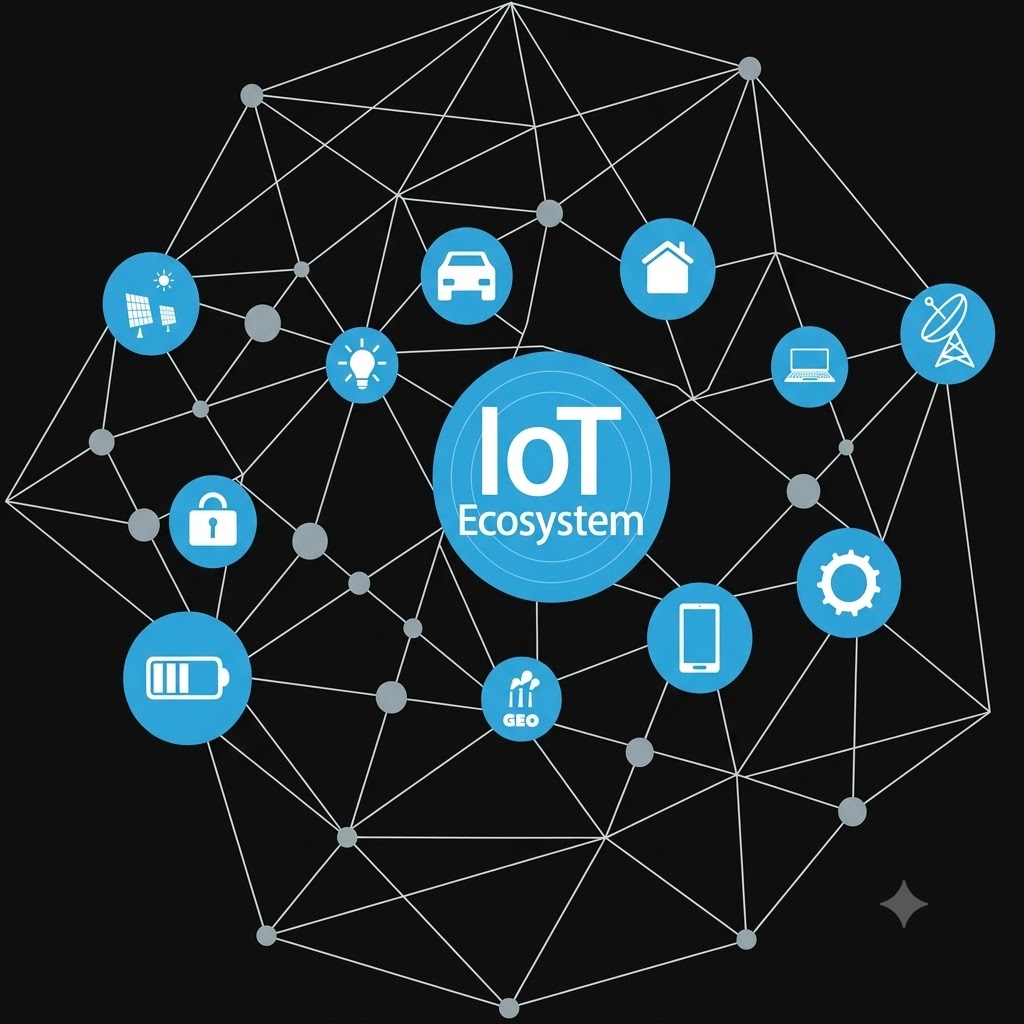


Yashashree Techno Solutions is leading IoT System Integrator Services in India. An IoT system integrator connects smart devices, sensors, gateways, cloud platforms, enterprise software, and business applications into a coordinated technology environment. IoT integration helps organizations collect data from connected devices and use it for monitoring, automation, analytics, and smarter operations.
An experienced IoT system integrator can provide end-to-end IoT system integration services, from IoT consulting services and infrastructure planning to implementation, deployment, monitoring, and ongoing management. Such solutions can support both commercial applications and industrial IoT environments.
Modern IoT solutions combine IoT device integration, IoT cloud integration, IoT network integration, edge computing, APIs, data management, and automation. These technologies enable organizations to connect physical equipment with digital platforms while creating reliable data flows between devices, networks, applications, and cloud environments.
Service Providers in India
IoT service providers in India help organizations design and implement connected technology solutions according to their operational requirements. An IoT solutions provider may integrate smart devices and sensors, IoT gateways, cloud and integration platforms, enterprise software, and business applications.
Professional providers can offer IoT integration services, IoT implementation services, IoT deployment services, and IoT consulting services. They can also support data management, device management, network connectivity, analytics, and integration with existing IT and OT environments.
When selecting an IoT solutions provider, organizations should consider technical expertise, interoperability, security, scalability, integration capabilities, industry experience, and ongoing support.
System Integrators in India
An IoT system integration company connects different hardware, software, networks, cloud platforms, and enterprise systems into one integrated environment. The objective is to allow connected devices and business systems to communicate and exchange information effectively.
An industrial IoT system integrator can integrate PLC, SCADA, MES, ERP, industrial sensors, machines, and other OT systems with modern IoT platforms. IT/OT integration can help organizations connect operational data with enterprise applications and analytics platforms.
IoT system integrators can also work with technologies and protocols such as MQTT, OPC UA, Modbus, REST API, HTTP, LoRaWAN, AMQP, and WebSockets, depending on project requirements.
Types of IoT System Integration
We provide IoT System Integration services in India and offer various types to meet different requirements.
- Smart Devices & Sensors Integration: Connects sensors and smart devices to IoT networks so organizations can collect operational, environmental, machine, or asset-related data.
- IoT Gateway Integration: IoT gateways collect and process device information before transferring data to cloud platforms, edge systems, or enterprise applications.
- Cloud & Integration Platforms: Connects IoT devices and data with cloud platforms to support centralized data processing, storage, monitoring, analytics, and application access.
- Enterprise Software Integration: Integrates IoT data with ERP, MES, CRM, and other business applications to support data-driven business operations.
- IoT Device Integration: Connects different types of IoT devices and ensures that information can be exchanged between devices, gateways, platforms, and applications.
- IoT Platform Integration: Connects connected devices and applications with IoT platforms for device management, data processing, analytics, and monitoring.
- IoT Application Integration: Connects IoT applications with business systems and operational software to support automated workflows and data-driven processes.
- IoT Network Integration: Establishes communication between connected devices, gateways, networks, edge systems, and cloud environments.
- IoT Hardware Integration: Integrates sensors, controllers, gateways, PLCs, machines, and other physical components into an IoT infrastructure.
- IoT Software Integration: Connects IoT software with cloud platforms, databases, enterprise applications, analytics tools, and other digital systems.
Detailed Process Description of IoT System Integration
- Requirement Assessment: the integration process begins by understanding business objectives, connected assets, existing systems, data requirements, connectivity needs, and expected outcomes.
- IoT Architecture planning: a suitable IoT architecture is designed by defining devices, connectivity, gateways, edge computing, cloud platforms, data systems, applications, and security requirements.
- Device and Hardware Integration: Smart devices, sensors, PLCs, machines, and other equipment are connected according to the required communication and data collection requirements.
- Gateway and Network Configuration: Edge gateways and network connectivity are configured to collect device information and securely transfer data between local equipment and higher-level platforms.
- Cloud and Platform Integration: IoT devices and gateways are connected with appropriate cloud platforms or integration platforms for centralized processing, storage, monitoring, and analytics.
- API and Application Integration: APIs and integration technologies connect IoT platforms with enterprise applications, dashboards, ERP, MES, CRM, and other business systems.
- Data Integration and Analytics: Collected information is processed and organized for IoT analytics, reporting, monitoring, predictive insights, and operational decision-making.
- Testing and Validation: The complete IoT environment is tested for connectivity, interoperability, data accuracy, communication reliability, security, and application performance.
- Deployment and Monitoring: After implementation, IoT deployment services help put the solution into operation while IoT monitoring solutions track connected devices, networks, and system performance.
Technical Specifications of IoT System Integration
As a trusted Providers of IoT System Integration Services in India, we serve businesses across various industries that meet professional visual communication requirements.
| Integration Parameter | Technology / Capability | Connectivity / Protocol | Application | Implementation |
|---|---|---|---|---|
| Device Integration | Smart devices and sensors | MQTT, HTTP, Modbus | Data collection | As per requirement |
| Gateway Integration | Edge gateway and edge computing | MQTT, OPC UA, Modbus | Local processing | Customized |
| Cloud Integration | Cloud platforms and IoT platforms | REST API, HTTP, MQTT | Data storage and analytics | Scalable |
| Industrial Integration | PLC, SCADA, MES | OPC UA, Modbus | Industrial automation | As per application |
| Enterprise Integration | ERP, CRM, business applications | APIs, REST API | Business operations | Customized |
Features and Benefits of IoT System Integration
As well-known IoT System Integration Service Providers in India and below are some of the key Features and Benefits of these Services.
| Features | Benefits |
|---|---|
| Smart device integration | Enables centralized device connectivity |
| IoT gateway integration | Supports local data processing and communication |
| Cloud integration | Enables scalable data storage and processing |
| Edge computing | Supports faster local data processing |
| API integration | Connects IoT systems with business applications |
| Device management | Helps manage connected devices and their status |
| IoT analytics | Supports data-driven monitoring and insights |
| IT/OT integration | Connects industrial operations with enterprise systems |
| Interoperability | Helps different systems communicate effectively |
| IoT monitoring solutions | Supports visibility into connected infrastructure |
Applications of IoT System Integration
Our high-precision IoT System Integration Services in India are suitable for multiple industrial applications as listed below:
- Smart Manufacturing: IoT integration connects machines, sensors, PLCs, SCADA, MES, and enterprise systems to provide better visibility into manufacturing operations.
- Industrial Automation: Industrial IoT system integration can connect equipment and control systems with IoT platforms for monitoring, automation, and operational data analysis.
- Smart Buildings: Connected sensors and devices can monitor building conditions, energy usage, security systems, equipment status, and other facility operations.
- Energy Management: IoT connectivity solutions can collect energy-related data from connected equipment and provide information for monitoring and operational optimization.
- Asset Monitoring: IoT devices can collect information about equipment, assets, location, operating conditions, and status for centralized monitoring.
- Supply Chain Management: Connected devices can provide information related to inventory, transportation, environmental conditions, and logistics processes.
- Predictive Maintenance: IoT sensors can collect machine data that can be analyzed to identify operating patterns and support maintenance planning.
- Healthcare Systems: Connected medical devices and monitoring equipment can transfer relevant information to centralized platforms and applications where appropriate.
- Agriculture: IoT sensors can monitor soil, environmental conditions, irrigation systems, equipment, and other agricultural parameters.
- Connected Business Operations: IoT data can be integrated with ERP, MES, CRM, and other business applications to support connected and data-driven operations.
Why Choose Us?
As Providers of IoT System Integration Services in India, we deliver premium-quality Services designed to meet diverse industrial requirements. Here's why we stand out:
- End-to-End IoT Solutions: we support IoT projects across consultation, architecture, device integration, cloud integration, application connectivity, implementation, and monitoring.
- Customized Integration: Our IoT solutions can be designed around existing infrastructure, connected devices, business applications, communication requirements, and operational objectives.
- Industrial Integration Expertise: we can support industrial environments involving PLC, SCADA, MES, ERP, industrial networks, and IT/OT integration requirements.
- Scalable IoT Infrastructure: Our approach considers future devices, applications, data volumes, connectivity requirements, and changing operational needs when designing IoT infrastructure solutions.
- Connected and Data-Driven Operations: we help organizations connect devices and systems so that collected data can be used for monitoring, analytics, automation, and improved operational visibility.
Yashashree Techno Solutions is leading IoT System Integrator Services in India. An IoT system integrator plays an important role in connecting devices, sensors, gateways, networks, cloud platforms, enterprise software, and business applications into a unified environment. Through IoT integration services, organizations can establish reliable connectivity, improve data management, support IoT analytics, and create smarter operations. From industrial IoT system integration and IT/OT integration to cloud, application, hardware, software, and network integration, customized solutions can address different operational requirements. With proper IoT consulting services, implementation, deployment, monitoring, and management, businesses can develop scalable IoT solutions that connect physical assets with digital systems.
FAQ’s
IoT stands for Internet of Things. It refers to connected physical devices, sensors, machines, and systems that can collect, exchange, and process data through communication networks.
Common IoT categories include Consumer IoT, Commercial IoT, Industrial IoT (IIoT), and Infrastructure IoT. Each category serves different environments, devices, and operational requirements.
Common examples include smart sensors, connected cameras, smart thermostats, industrial machines, and wearable devices. The exact devices used depend on the application and IoT architecture.
A commonly referenced seven-layer IoT architecture includes physical devices, connectivity, edge computing, data accumulation, data abstraction, applications, and collaboration/processes.
IoT does not always require extensive coding for end users, but IoT development and integration projects commonly involve programming, APIs, databases, networking, device configuration, and software development.