



Top 10 RTD Manufacturers in Pune | Yashashree Techno Solutions
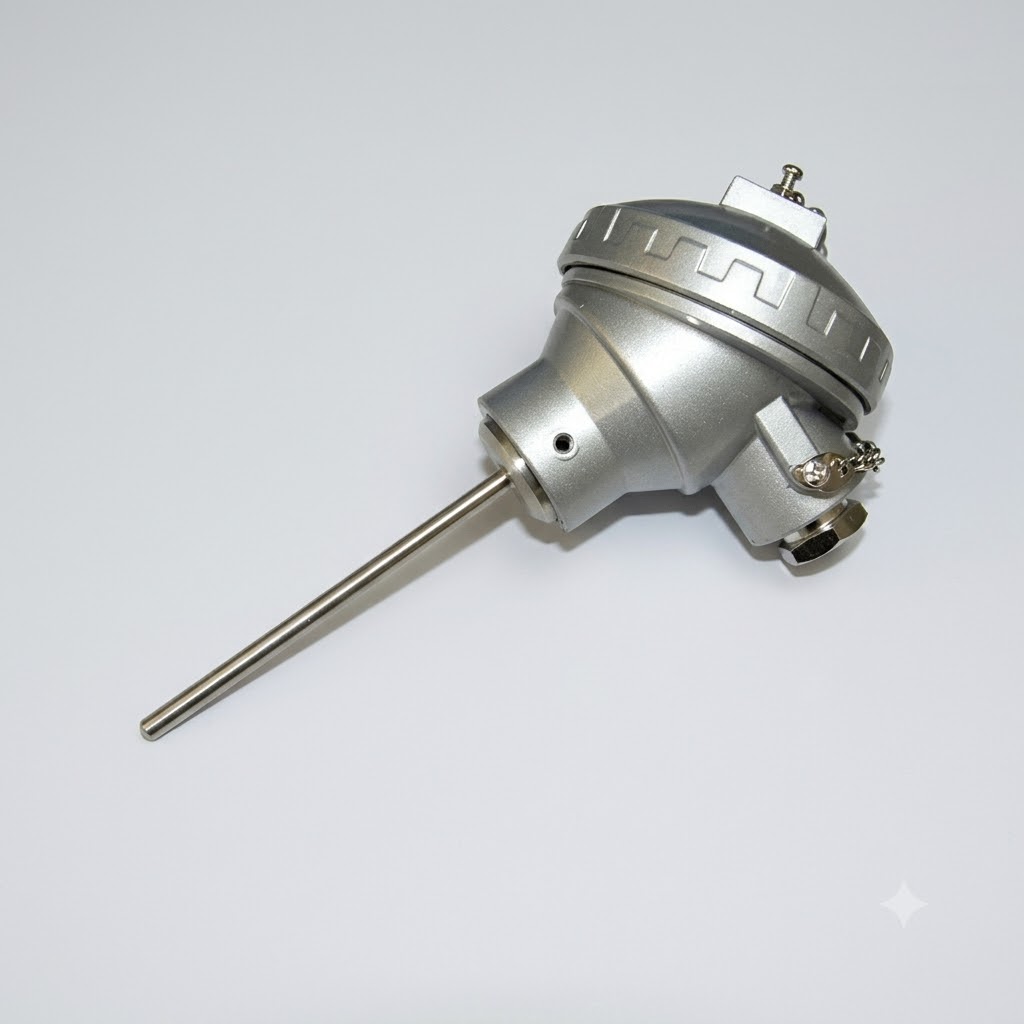


Yashashree Techno Solutions is leading RTD Manufacturers, Suppliers and Exporters in Pune. An RTD, or Resistance Temperature Detector, is a temperature sensing device that measures temperature by detecting changes in the electrical resistance of a sensing element. RTDs are widely used where stable, repeatable, and reliable temperature measurement is required.
Our RTD solutions are suitable for industrial temperature measurement, process control, industrial automation, machinery, and equipment monitoring applications. Depending on the application, RTDs can be selected with different sensing elements, probe constructions, wiring configurations, connection arrangements, and installation methods.
Common configurations include Pt100 RTD and Pt1000 RTD sensors, along with 2 wire RTD, 3 wire RTD, and 4 wire RTD arrangements. The appropriate configuration depends on measurement requirements, wiring distance, instrumentation, accuracy, and the application environment.
RTD Service Providers in Pune
- RTD Sensor: an RTD sensor measures temperature through the change in electrical resistance of its sensing element and provides a corresponding measurement signal.
- RTD Temperature Sensor: An RTD temperature sensor is used for temperature measurement in industrial equipment, processes, machinery, and automation systems.
- Industrial RTD Sensor: An industrial RTD sensor is designed for temperature measurement in industrial environments and can be configured with suitable probes, connections, and protective construction.
RTD System Integrators in Pune
- RTD Temperature Measurement: RTD temperature measurement determines temperature by measuring the resistance of the RTD element and converting that resistance into a corresponding temperature value.
- RTD Temperature Sensing: RTD temperature sensing is used where temperature information is required for monitoring, control, automation, or equipment operation.
- RTD Temperature Monitoring: RTD temperature monitoring provides temperature information from selected measurement points and can be connected to indicators, transmitters, PLCs, DCS systems, or other control equipment.
Types of RTD Sensors
As we are leading RTD Sensor Manufacturers in Pune, our Types are designed to meet different application requirements and industry standards, including the following types:
- Pt100 RTD: A Pt100 RTD has a nominal resistance of 100 ohms at 0°C and is widely used for industrial and process temperature measurement.
- Pt1000 RTD: A Pt1000 RTD has a nominal resistance of 1000 ohms at 0°C and can be used in suitable industrial, process, and automation measurement applications.
- 2 Wire RTD: A 2 wire RTD uses two conductors to connect the sensing element to the measurement device. The resistance of the connecting wires can contribute to measurement error.
- 3 Wire RTD: A 3 wire RTD uses three conductors and is commonly used in industrial measurement systems to compensate for the resistance of the connecting wires.
- 4 Wire RTD: A 4 wire RTD uses four conductors and can provide more accurate resistance measurement by reducing the influence of lead resistance.
- RTD Probe: An RTD probe contains the sensing element within a suitable protective construction for insertion, immersion, surface measurement, or equipment installation.
- RTD Temperature Probe: An RTD temperature probe is designed to position the RTD element at the required measurement location while providing suitable mechanical and environmental protection.
- Process RTD Sensor: A process RTD sensor is configured for measuring temperature in industrial processes and can be designed with suitable process connections and protective components.
- RTD for Industrial Automation: RTDs for industrial automation provide temperature feedback to PLCs, DCS systems, transmitters, indicators, and other automation equipment.
- RTD for Equipment Monitoring: RTDs for equipment monitoring measure temperature at selected equipment or machinery locations where temperature information is required for monitoring or control.
Detailed RTD Process
- Application Requirement Analysis: We begin by understanding the required temperature range, accuracy, measurement point, process conditions, installation method, wiring distance, and connected measurement system.
- RTD Type Selection: The appropriate RTD configuration is selected according to the application. Pt100 and Pt1000 are common choices, with the final selection depending on system requirements.
- RTD Element Selection: The RTD element is selected according to the required measurement characteristics, temperature range, accuracy, construction, and application requirements.
- RTD Probe Design: RTD probe design considers probe length, diameter, sheath construction, sensing location, process connection, terminal arrangement, and environmental requirements.
- RTD Sensor Construction: RTD sensor construction includes the sensing element, internal connections, insulation, protective sheath, probe body, terminal arrangement, and other components required for the selected design.
- RTD Sensor Assembly: RTD sensor assembly brings together the sensing element, internal wiring, insulation, protective construction, connection arrangement, and other required components.
- RTD Sensor Wiring: RTD sensor wiring is configured according to the selected 2-wire, 3-wire, or 4-wire measurement arrangement and the requirements of the connected instrument.
- RTD Connection: The RTD connection is established between the sensor and the measurement or control system through suitable terminals, cables, transmitters, or other interfaces.
- RTD Terminal Configuration: RTD terminal configuration provides the required connection points for the sensing element and associated wiring according to the selected RTD configuration.
- Testing and Calibration: The completed RTD assembly and measurement circuit are tested and, where required, calibrated against a suitable reference to verify measurement performance.
Technical Specifications of RTD Sensors
As a trusted RTD Sensor Suppliers in Pune, we serve businesses across various industries that meet professional visual communication requirements.
| RTD Element / Configuration | Nominal Resistance at 0°C | Typical Application | Wiring | Measurement |
|---|---|---|---|---|
| Pt100 RTD | 100 Ω | Industrial / Process Measurement | 2 / 3 / 4 Wire | Resistance-Based |
| Pt1000 RTD | 1000 Ω | Industrial / Automation | 2 / 3 / 4 Wire | Resistance-Based |
| 2 Wire RTD | Application-Dependent | General Measurement | 2 Conductors | Lead Resistance Included |
| 3 Wire RTD | Application-Dependent | Industrial Measurement | 3 Conductors | Lead Compensation |
| 4 Wire RTD | Application-Dependent | Higher-Accuracy Measurement | 4 Conductors | Improved Lead Compensation |
| RTD Probe | Based on RTD Element | Equipment / Process | Application-Specific | Temperature |
| RTD Temperature Probe | Based on RTD Element | Process / Machinery | Application-Specific | Temperature |
| Industrial RTD Sensor | Based on Selected Element | Industrial Applications | Application-Specific | Temperature |
| Process RTD Sensor | Based on Selected Element | Process Control | Application-Specific | Temperature |
| RTD Transmitter System | Sensor-Dependent | Automation / Control | Sensor + Signal Output | Converted Signal |
Features and Benefits of RTD Sensors
As RTD Sensor Exporters in Pune, our products provide several Features and Benefits including consistent quality, smooth finish, and long service life.
| Features | Benefits |
|---|---|
| Resistance-based measurement | Provides a repeatable method of temperature measurement |
| Pt100 configuration | Widely applicable for industrial temperature measurement |
| Pt1000 configuration | Provides a higher nominal resistance for suitable measurement systems |
| 3-wire configuration | Helps compensate for lead resistance in many industrial installations |
| 4-wire configuration | Can provide improved measurement accuracy by reducing lead resistance effects |
| Custom probe construction | Allows installation according to application requirements |
| Industrial construction | Supports demanding process and equipment environments |
| Automation integration | Allows connection with PLC, DCS, transmitters, and monitoring systems |
| Calibration capability | Helps verify measurement performance |
| Multiple connection options | Supports different instrumentation and installation requirements |
Applications of RTD Sensors
As RTD Sensor Exporters in Pune, our all types are used in various types of industrial sectors such as:
- RTD for Temperature Measurement: RTDs are used for measuring temperature in industrial equipment, process systems, machinery, tanks, pipelines, and other applications where resistance-based temperature sensing is suitable.
- RTD for Process Control: RTD sensors provide temperature feedback to process control systems and can be connected to transmitters, PLCs, DCS systems, indicators, and other control equipment.
- RTD for Industrial Automation: RTD sensors are integrated into industrial automation systems to provide temperature feedback for monitoring, control, alarms, and configured machine functions.
- RTD for Machinery: RTDs can be installed on suitable machinery and components to monitor operating temperatures and provide measurement information to the relevant monitoring system.
- RTD for Equipment Monitoring: RTDs are used to monitor temperature at selected equipment locations where temperature information can support operational monitoring and control.
- RTD Process Temperature Measurement: Process RTDs measure temperature at selected process points and provide information required for process monitoring and control.
- Industrial RTD Sensor: Industrial RTD sensors are used in manufacturing, process plants, utilities, automation systems, and equipment where temperature measurement is required.
- RTD Temperature Monitoring: RTD temperature monitoring provides continuous or periodic temperature information from selected measurement points.
- RTD Temperature Sensing: RTD temperature sensing is used to detect temperature changes and convert them into resistance values that can be interpreted by suitable measurement systems.
- Process RTD Sensor: Process RTD sensors are used for temperature measurement in process applications where appropriate probe construction, process connections, and measurement characteristics are required.
RTD Sensor Components
RTD sensor components can include the RTD element, internal connecting wires, insulation, protective sheath, probe body, terminal arrangement, process connection, extension cable, and connector or transmitter depending on the design.
The RTD element is the primary sensing component. Its resistance changes with temperature, and the measurement system determines the corresponding temperature from the measured resistance.
RTD sensor construction can be customized according to the measurement location, process conditions, mechanical requirements, temperature range, and installation method.
RTD Sensor Wiring
RTD sensor wiring connects the sensing element to the measurement instrument or temperature transmitter. Common configurations include 2 wire RTD, 3 wire RTD, and 4 wire RTD arrangements.
In a 2 wire RTD, the resistance of the connecting wires can affect the measured resistance. A 3 wire RTD uses an additional conductor to compensate for lead resistance in suitable measurement circuits.
A 4 wire RTD uses separate current and voltage paths and can reduce the influence of lead resistance, making it suitable for applications requiring more accurate resistance measurement.
The appropriate RTD connection should be selected according to the sensor, instrument, wiring distance, required accuracy, and application requirements.
RTD Accuracy and Calibration
RTD accuracy depends on the RTD element, sensor construction, temperature range, measurement instrument, wiring arrangement, installation conditions, and calibration.
A 3 wire or 4 wire arrangement may be selected where the effect of lead resistance needs to be reduced. The measurement system and sensor should be considered together when determining the expected measurement performance.
RTD sensor calibration compares the measured temperature or resistance with a suitable reference under defined conditions. Calibration requirements depend on the application, measurement accuracy, operating environment, and applicable procedures.
Why Choose Us?
As one of the leading RTD Sensor Manufacturers in Pune, we deliver premium-quality solutions designed to meet diverse industrial requirements. Here's why we stand out:
- Complete RTD Solutions: we provide RTD sensor solutions including Pt100, Pt1000, 2-wire, 3-wire, and 4-wire configurations for industrial and process applications.
- Application-Specific RTD Selection: our approach considers temperature range, measurement accuracy, installation method, wiring configuration, process conditions, and connected instrumentation.
- Customized Probe Design: RTD probe design and construction can be configured according to measurement location, process connection, mechanical requirements, and environmental conditions.
- Automation Integration Support: RTD sensors can be integrated with transmitters, PLCs, DCS systems, indicators, and other suitable temperature monitoring and control equipment.
- Testing and Calibration Support: we support RTD testing and calibration requirements to help verify temperature measurement performance for industrial and process applications.
Yashashree Techno Solutions is leading RTD Manufacturers, Suppliers and Exporters in Pune. An RTD, or Resistance Temperature Detector, provides temperature measurement by detecting changes in the electrical resistance of its sensing element. Pt100 and Pt1000 are commonly used RTD configurations, while 2-wire, 3-wire, and 4-wire arrangements provide different approaches to connecting the sensing element to the measurement system.
Proper RTD selection requires consideration of temperature range, accuracy, sensing element, probe construction, process conditions, wiring arrangement, installation method, and instrumentation compatibility. RTD probe design and sensor construction can also be adapted according to the requirements of the application.
From RTD for process control and industrial automation to RTD temperature monitoring, machinery measurement, and equipment monitoring, these sensors can provide reliable temperature feedback when correctly selected, installed, tested, and calibrated.
FAQ’s
An RTD is a Resistance Temperature Detector that measures temperature by detecting the change in electrical resistance of its sensing element.
RTD stands for Resistance Temperature Detector. It is a temperature sensor that uses a predictable resistance change to measure temperature.
An RTD temperature sensor works by measuring the electrical resistance of its sensing element. As temperature changes, the element's resistance changes in a predictable manner, allowing the measurement system to determine temperature.
The working principle of an RTD is based on the relationship between the electrical resistance of the sensing element and temperature. The measured resistance is converted into a corresponding temperature value.
Common RTD configurations include Pt100, Pt1000, 2-wire RTD, 3-wire RTD, and 4-wire RTD. RTDs can also be supplied in different probe and construction styles.
A Pt100 RTD is a resistance temperature detector with a nominal resistance of 100 ohms at 0°C. It is widely used for industrial and process temperature measurement.